

Can I rent out my Celina Home?
If you’re reading this because you want to know what your house can rent for (not a generic “Celina average”), go here and plug in the address: Celina Property Management page.
That page is built for owners who want clarity without the runaround.
What changed recently (and why it matters)
Here’s what I’m seeing on the ground in Celina:
There’s more competition. Renters shop harder when they have options.
Owners have less room to “start high and test it.” That strategy can turn into extra vacancy days fast.
Vacancy tends to be a pricing problem first and a condition problem second. Not always—but most of the time.
My goal with this post is to help you avoid becoming the listing that sits.
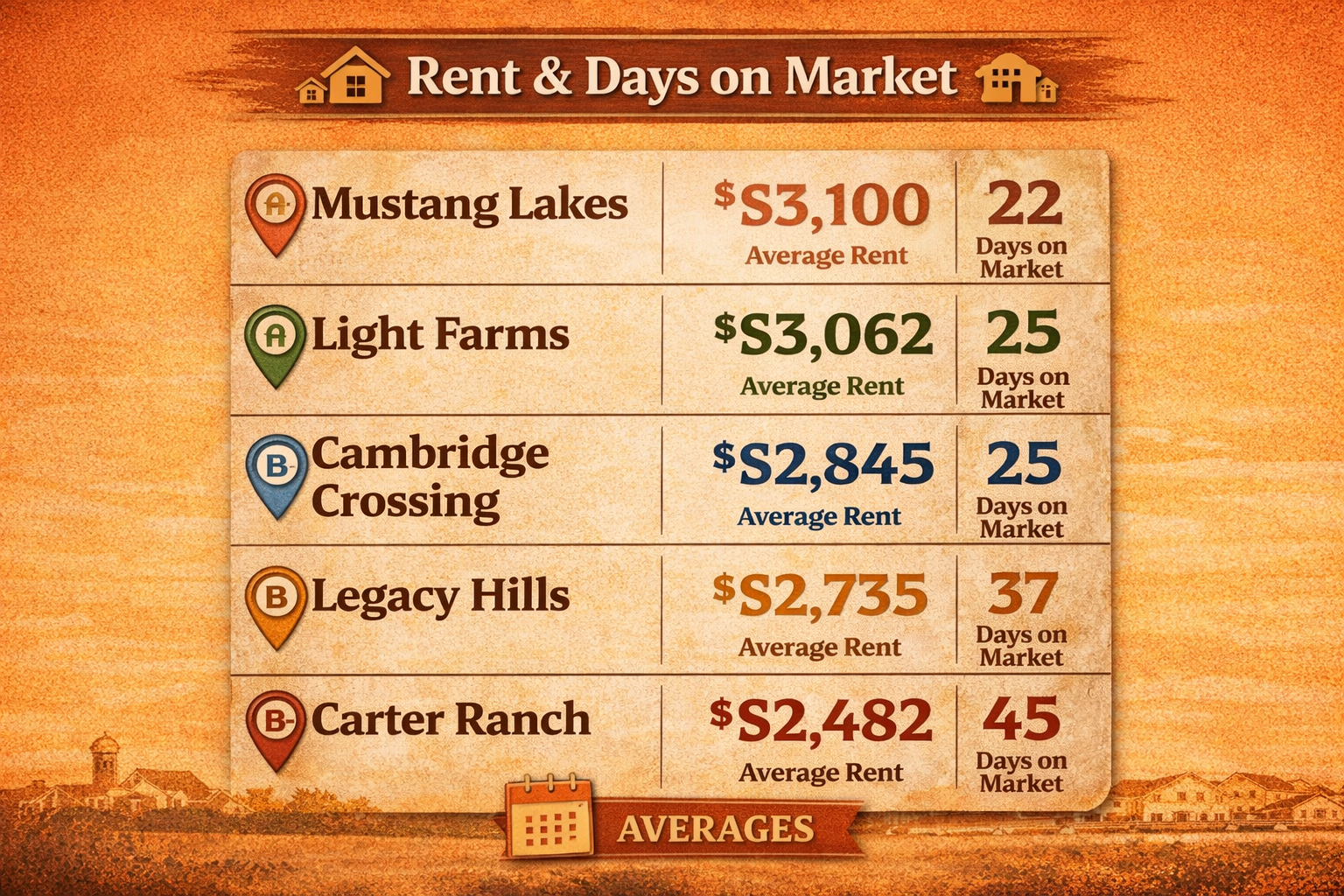
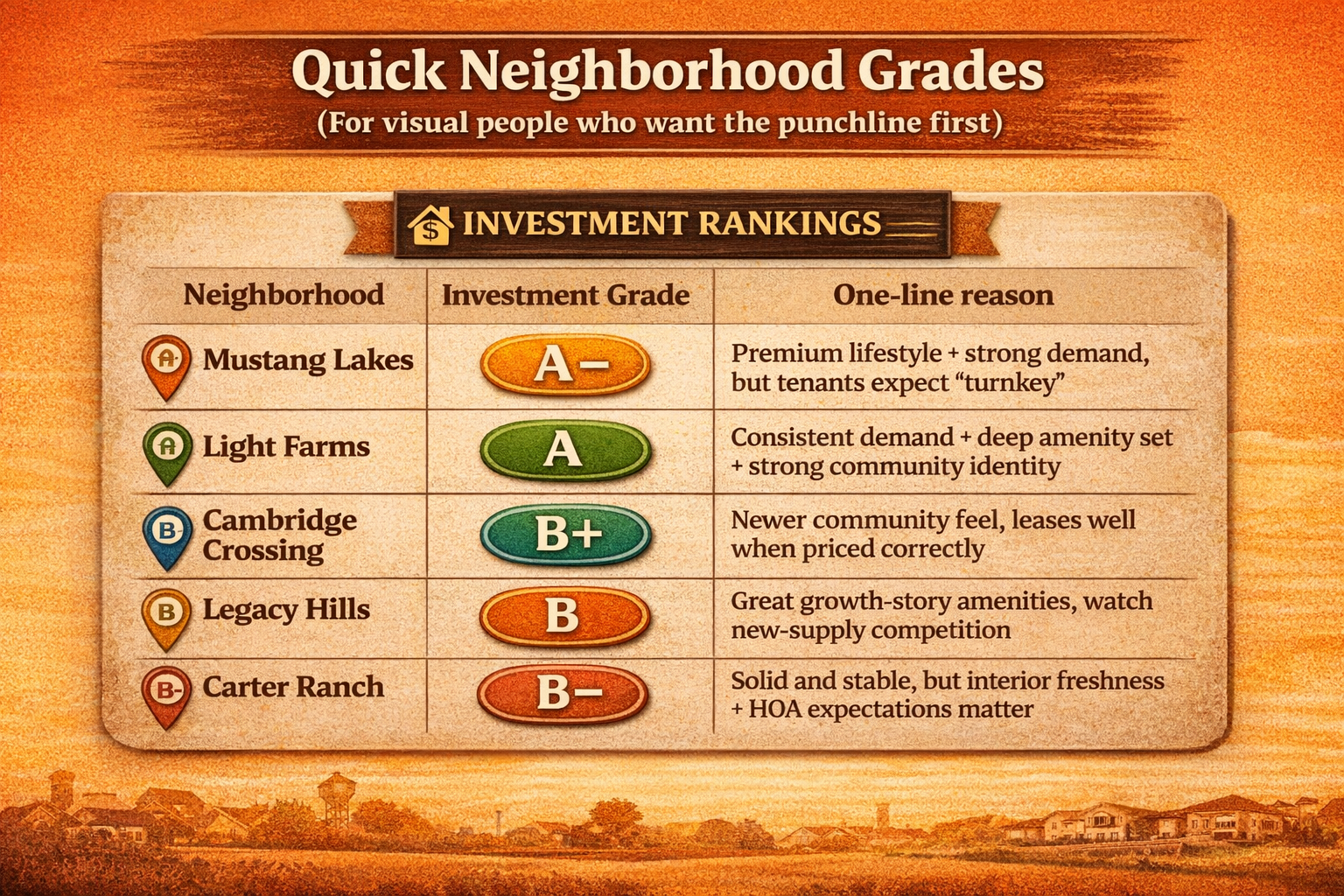
Celina neighborhood snapshots owners care about
One thing I want you to remember: a citywide number doesn’t price your house. Your neighborhood, finishes, layout, and what you’re competing against this week matters more than any single “average.”
Here’s how I’d explain these neighborhoods to a friend over coffee.
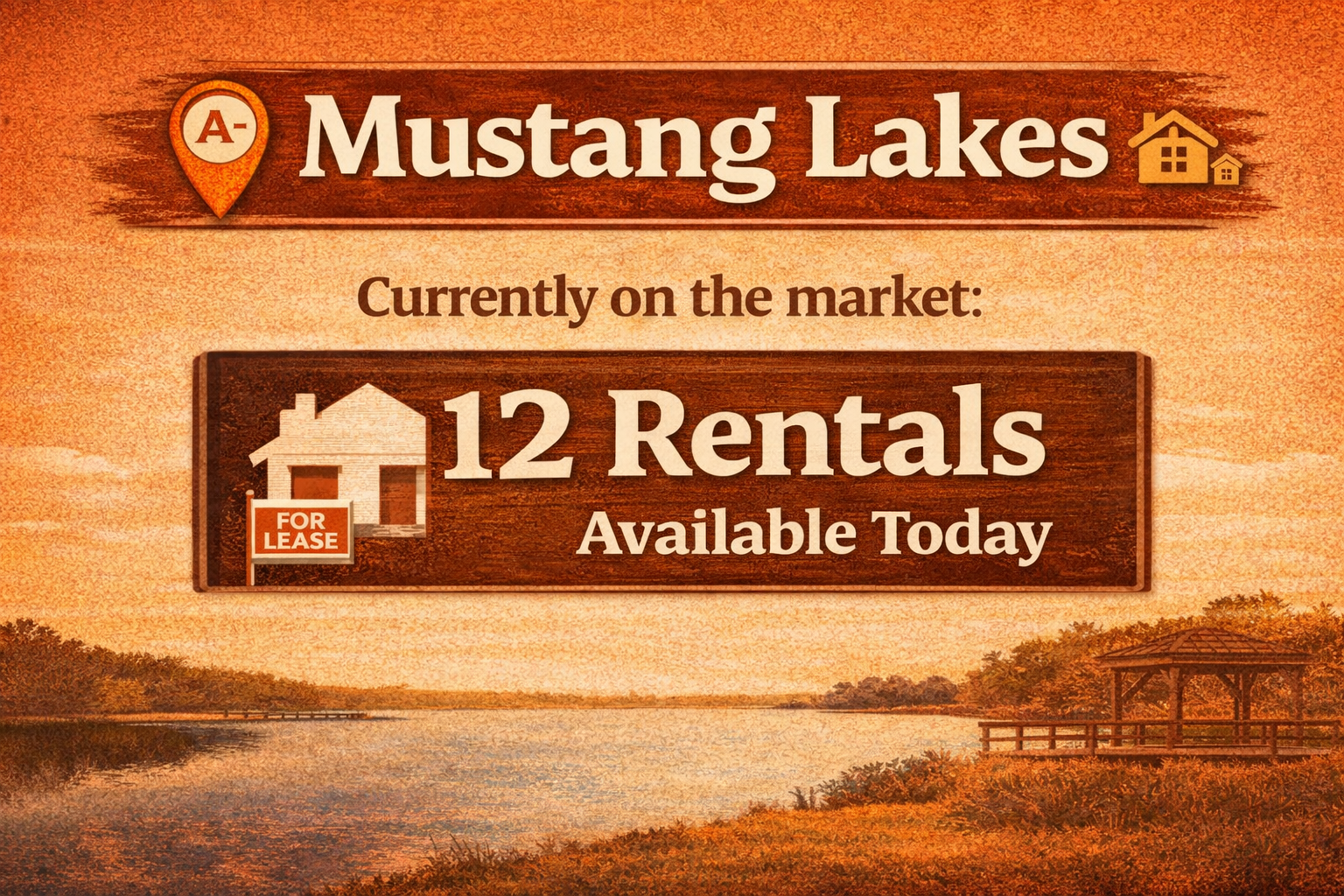
Mustang Lakes
Investor Grade: A–
Why renters are happy here (the real vibe)
Mustang Lakes feels like “resort living without feeling fake.” You’ve got a 5-acre stocked lake, bridges and a fishing deck, multiple pools (including a Junior Olympic pool plus resort and tot pools), tennis, basketball, an amphitheater, playgrounds, and 18 miles of trails.
And here’s the part owners love: front yard maintenance is included in the HOA fee—which helps keep the neighborhood looking sharp and reduces the “tenant let the yard go” headache.
What tends to lease best here
Homes that feel clean, modern, and premium. At this price point, tenants don’t want projects—they want turnkey.
Two recent leasing scenarios we’ve handled here
Scenario 1
A 4 bed, 3 bath home (mid 2,000s sf) with an upgraded kitchen and a strong backyard. We launched with professional photos and a true “turnkey” prep (touch-ups, deep clean, and curb appeal refresh). Showings came in quickly, but early feedback was basically: “Love it… still looking.” That’s usually a pricing vs. expectation gap at this level. We tightened the listing copy to sell the lifestyle (lake, trails, pools) and adjusted the price to land just under the closest comparable. Once it looked like the best value in its band, it went from “interest” to “applications.”
Scenario 2
A 4 bed, 3.5 bath home (around 3,000 sf) with a media room. It photographed great, but the first week was slower than it should have been. We didn’t panic—we looked at the competition set and realized two nearby listings were offering more perceived value. We corrected two small friction points (a couple make-ready details and a minor marketing reposition) and opened up showing availability. Once renters saw it in person, the home performed.
What I’d tell an owner in plain English: Mustang Lakes tenants are picky, but they’re decisive when the home feels premium and the price makes sense.

Light Farms
Investor Grade: A
Why renters are happy here (the real vibe)
Light Farms is one of those communities where renters don’t just rent a house—they’re buying into a lifestyle. The community emphasizes miles of trails, multiple pools, and an extensive sports complex, and it’s designed to feel social and active.
If you’ve got tenants with kids (or just tenants who like being outside), this place sells itself because there’s always “something to do.”
What tends to lease best here
Homes priced to be the best value in the first page of results—paired with a clean, easy showing experience.
Two recent leasing scenarios we’ve handled here (details anonymized)
Scenario 1
A 3 bed, 2 bath home (about 2,000 sf) with great natural light and a very “clean” layout. In Light Farms, renters compare a lot of homes in a short time. So we priced it to be the best value in its band, not the highest. We leaned into lifestyle language in the listing and kept showings easy. It produced strong traffic right away and converted fast.
Scenario 2
A 4 bed, 3 bath home (mid 2,000s sf) with an office and covered patio. The owner initially wanted to start high. I explained the trade-off: one extra month vacant usually costs more than the rent difference you’re trying to squeeze out. We launched at a realistic number, watched the first 7–10 days closely, and the activity matched what we wanted to see (showings plus qualified inquiries). It leased without chasing it.
What I’d tell an owner in plain English: Light Farms rewards a strong launch. If you’re priced right early, the neighborhood does the heavy lifting for you.


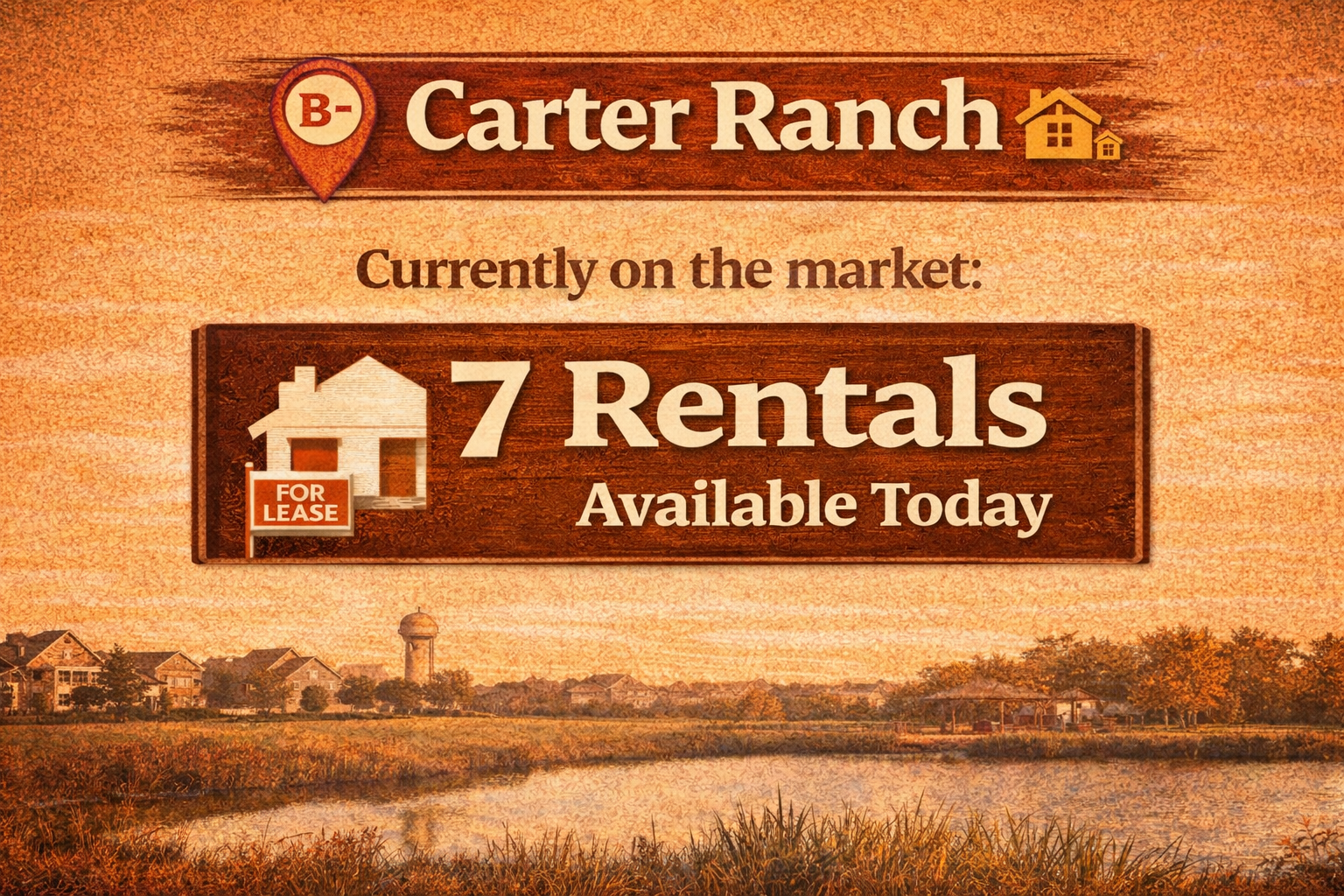
Carter Ranch
Investor Grade: B–
Why renters are happy here (the real vibe)
Carter Ranch has that “established neighborhood” feel—space, calmer streets, and a sense that people actually live there (not just pass through). Tenants who like a more grounded community often feel comfortable here quickly.
What tends to lease best here
Homes that feel refreshed inside. Older finishes can make a home sit longer than it should, because tenants compare it to “newer-feel” options nearby.
Two recent leasing scenarios we’ve handled here (details anonymized)
Scenario 1
A 3 bed, 2 bath home (high 1,000s sf) that was solid but starting to feel dated. We didn’t overspend—we did a simple refresh: paint touch-ups, modern light fixtures, new hardware, and a deep clean. Then we priced it against the newer-feel competition nearby. That’s the key. Carter Ranch can lease well, but you can’t price a dated interior like a brand-new build. Once it showed clean and updated, it moved.
Scenario 2
A 4 bed, 2.5 bath home (low 2,000s sf) with a great yard. Leasing activity was fine, but HOA compliance reminders started popping up because tenants were doing the normal “new move-in” stuff (bins, minor yard items). We coached the tenant early and set expectations in plain English. Once the tenant understood the rules of HOA living, it became smooth.
What I’d tell an owner in plain English: Carter Ranch is a good neighborhood, but interior freshness and HOA expectations matter. The owners who win here keep the home move-in ready and set tenant expectations early.

Cambridge Crossing
Investor Grade: B+
Why renters are happy here (the real vibe)
Cambridge Crossing is built around “quality of life” amenities—7 lakes, a clubhouse center, fitness center, trails, and pools—so renters feel like they’re getting more than just a roof.
That matters because tenants are comparing communities now, not just houses.
What tends to lease best here
Homes that have a clean value story: newer feel, functional layout, and pricing that respects what nearby substitutes are offering.
Two recent leasing scenarios we’ve handled here (details anonymized)
Scenario 1
A 4 bed, 2.5 bath home (mid 2,000s sf) with neutral finishes and great flow. We marketed it like a lifestyle decision—community vibe, lakes/trails, ease of living—not just “4/2.5.” It generated fast showings, and the tenant profile was strong because people shopping here tend to want the master-planned experience.
Scenario 2
A 3 bed, 2 bath home (around 2,000 sf) that was “nice” but not the flashiest. The first price idea was too close to the best homes available. We adjusted to a more competitive band and highlighted what renters care about: layout, storage, day-to-day livability, and community perks. It immediately improved showing quality.
What I’d tell an owner in plain English: Cambridge Crossing leases best when you respect the market. Newer doesn’t mean unlimited premium—it means you need a clean value story.

Legacy Hills
Investor Grade: B
Why renters are happy here (the real vibe)
Legacy Hills is a big master-planned story. It’s the kind of place renters pick because they can picture weekends there: parks, trails, kids outside, and a community that’s still building momentum. The development promotes a 27-acre city sports park, seven amenity centers, playscapes, and a 3-mile walking/biking trail.
That “bigger than your house” lifestyle pitch helps leasing—especially for tenants who want parks and activities nearby.
What tends to lease best here
Homes that launch strong and stay competitive as new inventory comes online.
Two recent leasing scenarios we’ve handled here (details anonymized)
Scenario 1
A 4 bed, 3 bath home (mid 2,000s sf) with a functional layout and strong curb appeal. We timed the launch and kept the home easy to tour. In growth communities, renters often have options, so speed matters. The home performed well because we removed friction: it was clean, ready, and priced where renters felt good moving quickly.
Scenario 2
A 3 bed, 2 bath home (around 1,900 sf) close to parks and trails. Interest was solid, but we saw competition from newer listings entering the market. Instead of letting it go stale, we tightened the price positioning early and updated the listing content to emphasize the “happy living” parts of the neighborhood—outdoor space, community energy, convenience. That helped it stand out and convert.
What I’d tell an owner in plain English: Legacy Hills can be a great rental neighborhood, but you have to stay aware of new supply. The owners who win here launch strong and adjust quickly when the market shifts.

What vacancy usually looks like (and how to avoid it)
Here’s the cycle I try to prevent for owners:
Days 1–14: Best attention window—if you’re priced right, you’ll feel it quickly.
Days 15–30: The market is giving feedback (price, photos, condition, policy mismatch).
After 30 days: Listings feel “stale,” even if nothing is wrong.
This is why I’m big on getting the launch right and adjusting early when the market tells us to.
How we price rentals to minimize vacancy (and why “aiming high” costs more)
Owners tell me all the time: “Let’s start high and see what happens.”
I understand the logic—but here’s the problem: you usually pay for that decision with vacancy. One extra month vacant can cost far more than the difference between “high” and “right.”
Our approach:
Active competition first: what is a tenant comparing you against today?
Leased/closed comps second: what actually moved recently?
Adjustments that matter: layout, yard, finishes, “newer feel,” pet friendliness
Feedback loop: showings and applicant quality tell you if we nailed it
Want a neighborhood-specific rent range and vacancy plan?
If you’re on the fence about renting, I’m happy to help you get clarity without pressure.